 Available in US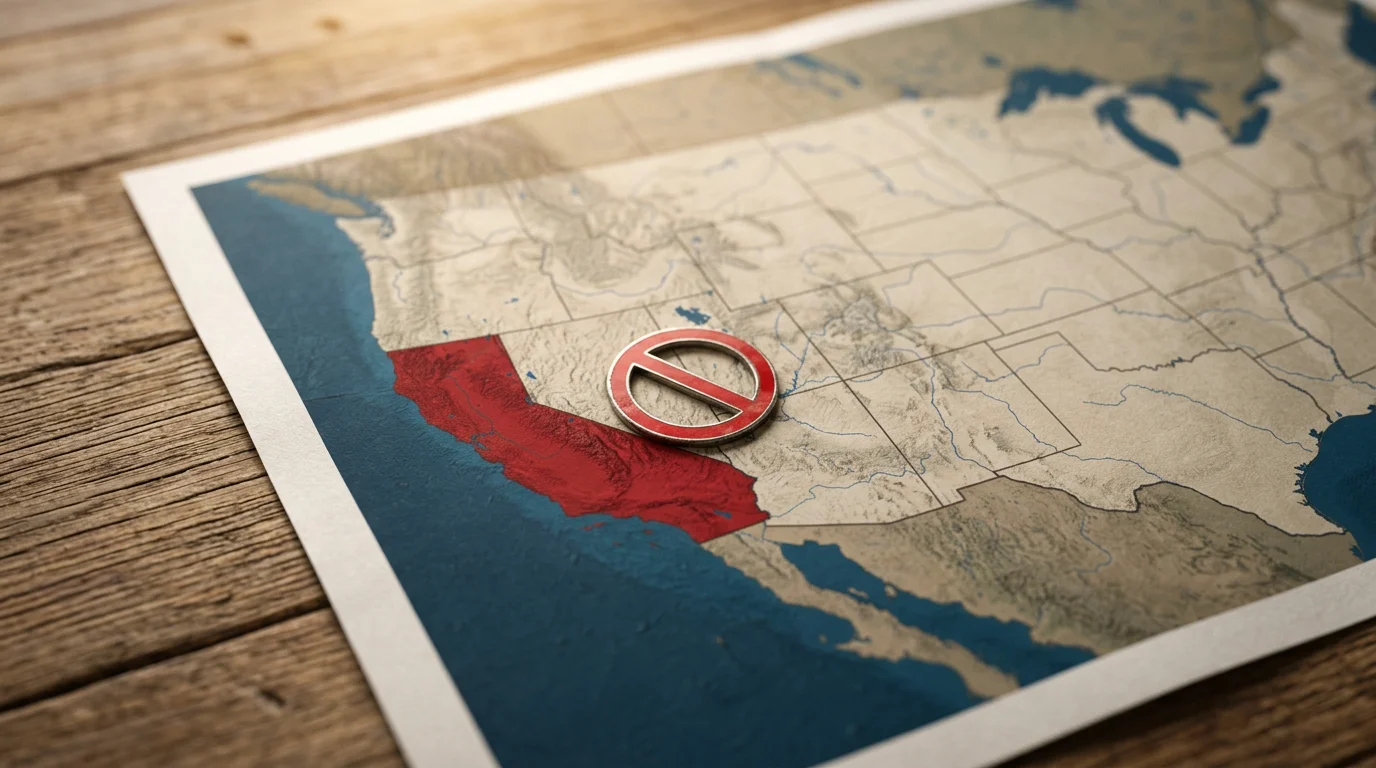
On January 1, 2026, the California sweepstakes casino ban took effect, and the largest state in the country went dark for every sweepstakes platform operating in the United States. Assembly Bill 831 — the legislation that made it happen — did not just ban sweepstakes casinos in California. It redefined the terms of engagement for the entire industry. California represented 17.3% of all U.S. sweepstakes sales in 2025, according to EKG data reported by Lines.com. Losing that share was not a minor regulatory adjustment. It was the ban that redrew the map.
AB 831 is the most aggressive anti-sweepstakes legislation passed by any state to date. It goes further than a simple ban on platform operation. It extends criminal liability to vendors — the payment processors, geolocation providers, content suppliers, and media affiliates that power sweepstakes platforms. No other state has targeted the supply chain this way. Understanding what AB 831 says, how it passed, and what it means for players and operators requires looking at each layer in turn.
Legal Implications and Restrictions of the AB 831 Bill
The law classifies the operation of sweepstakes casinos in California as a criminal offense. Operators who continue to offer their platforms to California residents face penalties ranging from $1,000 to $25,000 in fines and up to one year of imprisonment. These are misdemeanor-level penalties, but they carry real consequences — especially for individuals within operating companies who can be personally identified.
The provision that sets AB 831 apart from every other state ban is its extension of liability beyond operators. According to the California Senate analysis of AB 831, the law makes it a criminal offense for vendors to knowingly provide services that enable sweepstakes casino operations targeting California residents. Vendors covered by this provision include payment processors that handle Gold Coin transactions, geolocation technology providers that verify player locations, game content suppliers, and media affiliates that advertise sweepstakes platforms to California audiences.
This vendor liability clause has had a chilling effect that extends well beyond California’s borders. Payment processors that serve multiple sweepstakes platforms have had to assess whether continuing to process transactions for any platform that might reach California residents exposes them to criminal liability. Geolocation providers face similar calculus. Even advertising networks have reconsidered sweepstakes campaigns that could be served to California IP addresses. The law does not just block players from accessing sweepstakes casinos — it pressures the infrastructure that supports the entire industry.
The fine structure ranges from $1,000 to $25,000 per violation, with no statutory distinction between first and repeat offenses — even a first violation can draw the maximum penalty. The imprisonment provision — up to one year — applies in theory, though enforcement against individuals has not been tested as of early 2026.
The Legislative Journey
AB 831’s passage through the California legislature was unusually swift and overwhelmingly bipartisan. The bill cleared the State Senate with a 36–0 vote and the Assembly with a 63–0 vote — not a single legislator in either chamber voted against it, according to ZwillGen’s legal analysis. That unanimity is remarkable in a state legislature that divides sharply on most regulatory issues. Sweepstakes casinos managed to unite both parties in opposition.
The driving forces behind that unanimity were twofold. California is home to over 70 tribal casinos that generate more than $9 billion annually in gaming revenue. Tribal gaming interests viewed sweepstakes casinos as unregulated competitors operating in their market without the licensing, taxation, or regulatory obligations that tribal operations comply with. The tribes’ lobbying infrastructure — well-funded, politically connected, and experienced in California policy fights — was deployed fully behind AB 831.
The second force was the AGA-driven narrative that sweepstakes casinos exploit legal loopholes, avoid taxation, and lack consumer protections. That framing resonated with legislators who were already skeptical of an industry that had grown to billions in revenue while contributing nothing to state coffers. The AGA’s data — showing that 90% of sweepstakes users consider the activity gambling, that operators return only 65–72% of purchases, and that no independent RNG audits exist — provided the evidentiary foundation for the ban.
Governor Newsom signed AB 831 on October 11, 2025. The law took effect on January 1, 2026, giving operators less than three months to wind down California operations, process pending redemptions, and notify affected players.
Impact on California Players
For California residents who were active sweepstakes casino players, AB 831’s effective date triggered immediate account suspensions across every major platform. Chumba Casino, Stake.us, WOW Vegas, McLuck, Pulsz, High 5 Casino — all blocked California IP addresses and suspended accounts registered to California addresses. Players with pending redemption requests at the time of the ban generally had their withdrawals processed if KYC was already approved, though some reported delays as platforms scrambled to comply with the new law.
SC balances that had not been redeemed before January 1 were handled differently by different platforms. Some operators allowed a grace period for eligible players to cash out remaining SC. Others froze accounts with balances intact, offering no clear timeline for resolution. The lack of a standardized wind-down protocol — there is no regulatory body overseeing sweepstakes platforms — meant that each operator created its own ad hoc process.
Jeff Duncan, Executive Director of the Social Gaming Leadership Alliance, characterized the ban as shortsighted. Voters, players, tribes, and operators had all made their positions clear, Duncan argued — they did not want to eliminate a popular form of entertainment. The governor chose the simple path, turning away from choice, innovation, and economic benefits. For the industry, this was a call to arms. For California players, it was a notice that their accounts were already gone.
Alternatives for California residents are limited. Traditional social casinos (no cash prizes), licensed iGaming (not legal in California), and tribal casinos (physical locations only) are the remaining options. The sweepstakes model that once offered free-to-play access with real-money redemption potential is no longer available in the state.
Broader Implications for the Industry
California’s ban carries weight beyond its borders because of the state’s market size and political influence. When the largest state economy in the country votes unanimously to criminalize sweepstakes casinos — including the vendors that support them — other states take notice. The vendor liability model, in particular, has been cited in pending legislation in Mississippi, Texas, and other states as a template for how to effectively shut down sweepstakes operations without relying solely on operator-focused enforcement.
The financial impact is already visible. EKG, the industry’s most-cited analytics firm, revised its 2026 revenue forecast downward after the California ban, projecting a 10% decline in industry net revenue. The loss of 17.3% of the total market cannot be absorbed without consequences — reduced marketing budgets, smaller jackpot pools, and fewer resources for platform development are all predictable downstream effects.
AB 831 also accelerated the internal consolidation of the industry. Smaller operators with thin margins and significant California exposure have faced existential financial pressure. The platforms best positioned to survive the post-California landscape are those with diversified state coverage, strong balance sheets, and the legal resources to navigate an increasingly hostile regulatory environment. The ban that redrew the map is still redrawing it — and the final boundaries are not yet settled.