 Available in US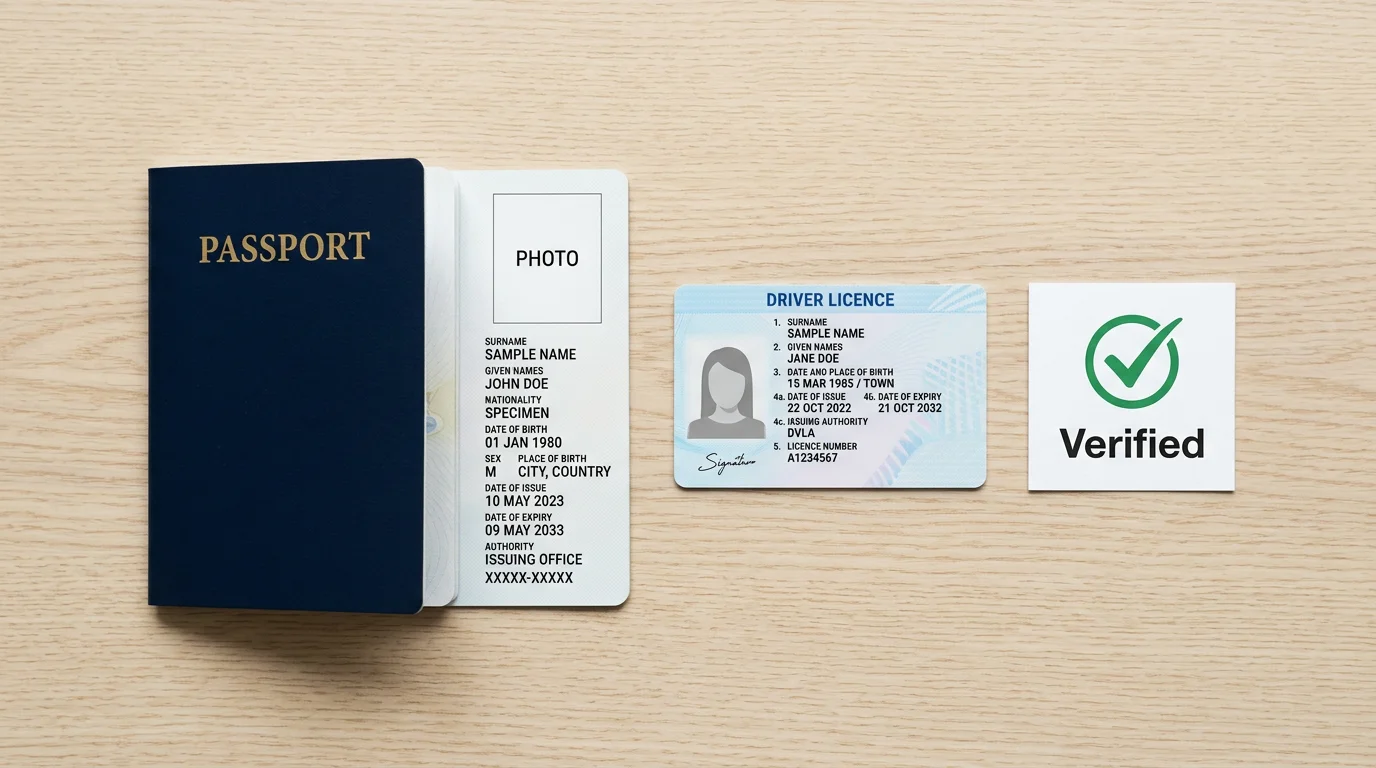
Sweepstakes casino KYC — Know Your Customer identity verification — is the mandatory checkpoint between accumulating Sweeps Coins and converting them into real money. Every platform requires it, no platform lets you skip it, and most players encounter it for the first time at the moment they least want a delay: when they are trying to cash out.
The sweepstakes model handles KYC differently from licensed iGaming platforms. At regulated casinos in states like New Jersey and Pennsylvania, identity verification happens at registration — before you place a single bet. Sweepstakes casinos reverse the sequence: you sign up instantly, play freely, and hit the verification wall only when you request your first redemption. This deferred approach lowers the barrier to entry but creates friction at the exit, which is why understanding the process before you need it is the difference between a smooth payout and a week of waiting. Verify once, redeem smoothly — that is the goal.
Mandatory KYC Documents Required by US Platforms
The standard KYC package at sweepstakes casinos includes three components, though the specific requirements vary slightly by platform.
Government-issued photo ID is universally required. Accepted documents include a driver’s license, passport, or state-issued identification card. The document must be current — expired IDs are rejected by every platform. Most sites require both the front and back of the ID to be submitted. The name on the ID must match the name on your sweepstakes account exactly. Even minor discrepancies — a middle initial present on one but not the other, a married versus maiden name — can trigger a rejection or a request for additional documentation.
Proof of address confirms that you reside in an eligible state. Accepted documents typically include a utility bill (electric, gas, water, internet), a bank statement, a mortgage or lease document, or an official government letter. The document must be dated within the past 60 to 90 days (the window varies by platform) and must display your name and physical address. P.O. boxes are generally not accepted.
SSN verification — specifically the last four digits — is required by some platforms for tax reporting purposes. Sweepstakes casinos that issue 1099-MISC forms for redemptions exceeding $600 need this information to comply with IRS reporting requirements. Not all platforms request this at the KYC stage; some collect it separately when the $600 threshold is approached.
The demographic profile of the sweepstakes player base is relevant here. According to AGA research on sweepstakes player profiles, the largest player segment falls between ages 31 and 50 — an adult demographic that generally has established document trails. Government IDs, utility bills, and bank statements are readily accessible for most players in this age range. Younger players who have recently moved or who do not have utility accounts in their name may face more difficulty assembling the required documents.
Process Timeline: From Upload to Approval
The KYC process typically follows a consistent sequence across platforms, though the speed of each step varies.
Document upload is instantaneous — you scan or photograph your documents and submit them through the platform’s verification portal, usually found in Account Settings or the Redemption section. Most platforms accept JPEG, PNG, or PDF formats. Photo quality matters: blurry, dark, or partially obscured documents will be rejected.
Review and processing is where the timeline diverges. Stake.us generally completes KYC review within 24–48 hours. WOW Vegas and Pulsz process within 1–3 business days under normal conditions. McLuck falls in a similar range. Chumba Casino and LuckyLand — both operated by VGW, which handles the highest volume of verifications in the industry — can take 3–7 business days during peak periods. High 5 Casino processes in 2–5 business days.
Approval notification arrives via email. Once approved, your account is verified permanently for that platform — you do not need to re-verify for subsequent redemptions unless you change your name or address. The data from AGA research shows that 80% of sweepstakes players spend money monthly, which means most active players go through the KYC process exactly once and then benefit from streamlined withdrawals for every subsequent redemption.
The practical recommendation is to submit your KYC documents immediately after creating your account, before you have any SC to redeem. This decouples the verification delay from your first withdrawal, so when you are ready to cash out, the approval is already in place. Every day you delay verification is a day added to your first payout timeline.
Common Rejection Reasons
Image quality issues are the most frequent cause of rejection. Photos taken in poor lighting, at an angle, or with part of the document cropped out of frame will not pass review. Use a flat, well-lit surface, position the camera directly above the document, and ensure all four corners and all text are clearly visible. If using a phone camera, disable any automatic filters or beauty modes that might alter the image.
Name mismatches between your ID and your account are a close second. If you registered with a nickname, abbreviated name, or omitted a middle name that appears on your government ID, the verification team will flag the discrepancy. Correcting this usually requires contacting customer support, explaining the difference, and sometimes providing additional documentation.
Expired documents are automatically rejected. Check the expiration date on your ID before uploading — and if your driver’s license is expiring soon, renew it before starting the KYC process rather than risk a rejection and re-submission delay.
Address discrepancies occur when your proof of address does not match the state or address on file with the platform. If you have moved since creating your account, update your address in your account settings first, then submit proof of the new address. A mismatch between your ID address and your proof-of-address document (common if you have recently moved) may require both documents showing the new address.
Restricted state residence is a rejection reason that catches some players off guard. If you registered when your state allowed sweepstakes casinos but a ban has since taken effect, your KYC submission will be rejected because your state is no longer eligible. Platforms geo-verify at the time of KYC review, not just at registration.
Privacy Concerns and Data Protection
Submitting government-issued identification and proof of address to a sweepstakes casino means trusting that operator with sensitive personal data. The level of trust warranted depends on the operator’s data handling practices, which vary across the industry.
Larger, established platforms — VGW (Chumba, LuckyLand), the operators behind Stake.us, WOW Vegas, and Pulsz — generally maintain data security infrastructure that includes encryption in transit and at rest, access controls on verification data, and policies governing data retention and deletion. These practices are not audited by any gaming regulator (because sweepstakes platforms do not hold gaming licenses), but they align with general data protection standards.
California residents who previously submitted KYC documents to sweepstakes platforms may have CCPA (California Consumer Privacy Act) rights regarding their data, even after the AB 831 ban. CCPA gives California consumers the right to know what personal information a company holds, request deletion, and opt out of data sales. Whether sweepstakes platforms comply with these requests varies — some have clear privacy request processes, while smaller operators may not respond at all.
For all players, a prudent approach is to submit KYC documents only to platforms you have verified as legitimate. Never upload government IDs to a site you have not checked for basic indicators of legitimacy — identifiable corporate ownership, published Terms of Service, and established player reviews. Your identity documents are valuable to fraudsters, and once compromised, the consequences extend far beyond your sweepstakes account.